Streamline Assessments, Evidence Collection, and Reporting with PlexTrac
Conquer Q4 as a Governance, Risk, and Compliance Consultant
Security service providers in the governance, risk, and compliance (GRC) space offer valuable guidance on risk for the organizations they support. These practitioners often have a different set of needs for their processes and reporting.
PlexTrac offers a flexible and comprehensive module for conducting security assessments. Base questionnaires on any of the common assessment frameworks and add and customize up to 1,000 questions in multiple question formats within a questionnaire. With PlexTrac, you can also export content — results, recommendations, references, and more — to your reports directly from the platform and skip the hassle of spreadsheets.
Report Templates Tailored to Your Organization
The Assessments Module in PlexTrac allows you to build assessments based on any variety of needs. While framework-based assessments (i.e. CMMC, NIST, CIS) are commonplace in the industry, the Assessments Module can also be used to build assessments for scoping, third party attestation, and more.
How to Maximize Assessments in PlexTrac
GRC practitioners will find the flexibility and efficiency in developing custom questionnaires, conducting assessments, and exporting reports that PlexTrac provides a simple solution for their use case.
Step 1: Define Questions per Governing Framework
In the Assessments Module, choose the framework you’d like to use.
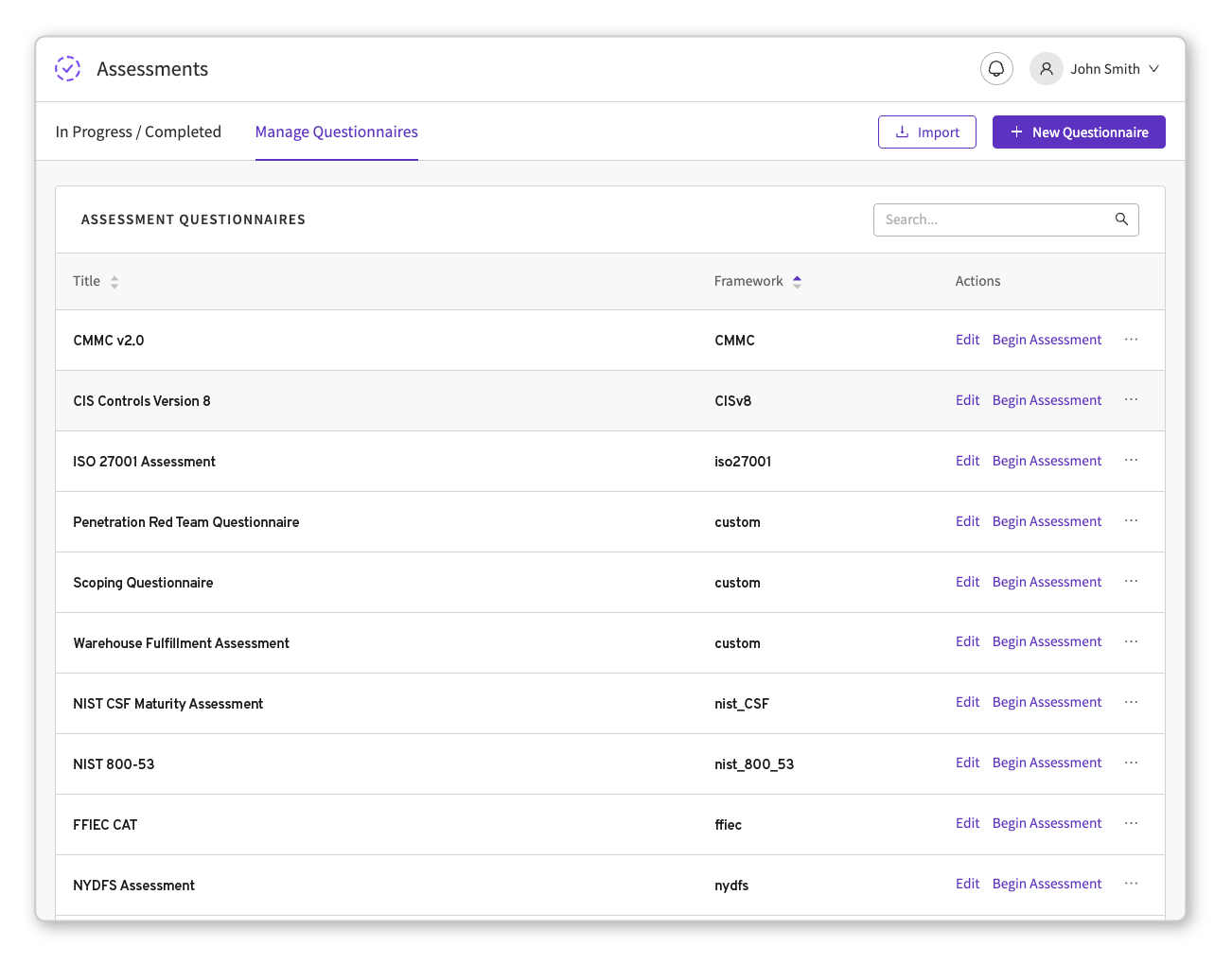
Within an assessment you have the ability to define each individual question according to the governing document that you’ve chosen or for general information gathering.
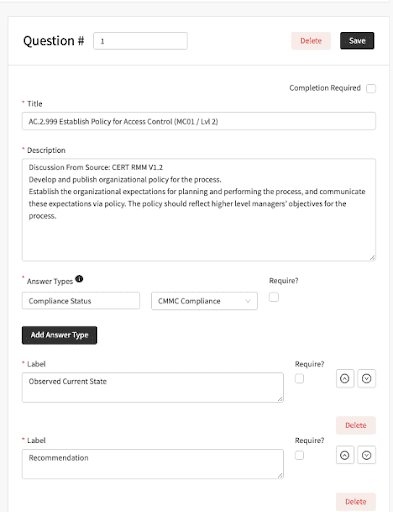
Step 2: Mask and Customize Report Content
Because each assessment ultimately turns into a PlexTrac report, you can also include data that won’t be viewed during the assessment but will be present in the report. This includes candid recommendations, references, and even custom fields for any other information you’d like to attach to this question for report writing.
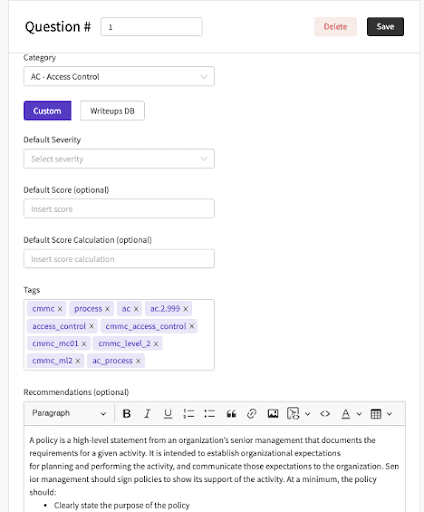
Step 3: Track Status and Attach Evidence
Once an Assessment has begun you can track the status of both individual questions and the overall report.
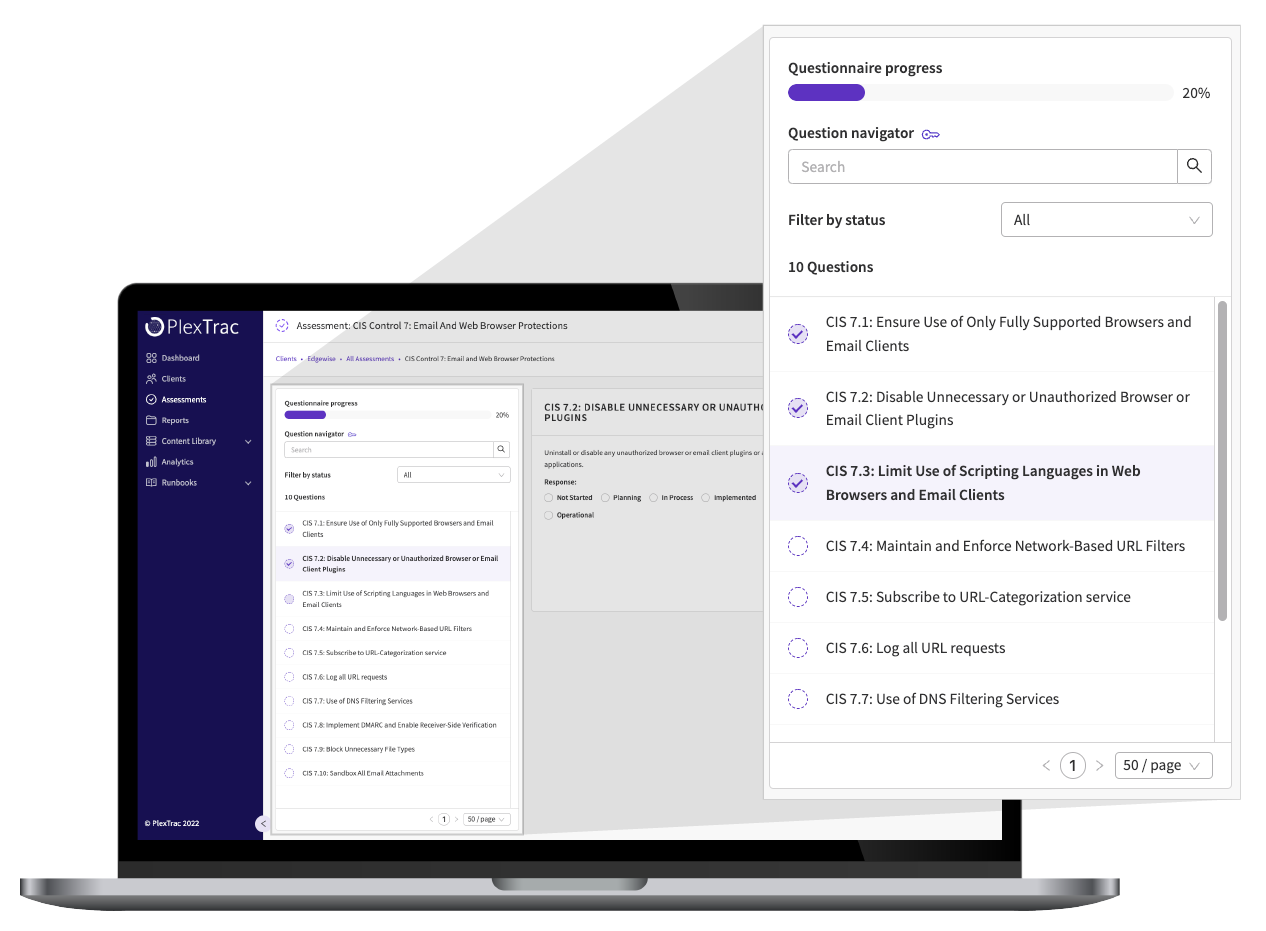
While taking the assessment, you will see all of the answer types, input fields, and general details around the question that you’ve defined.
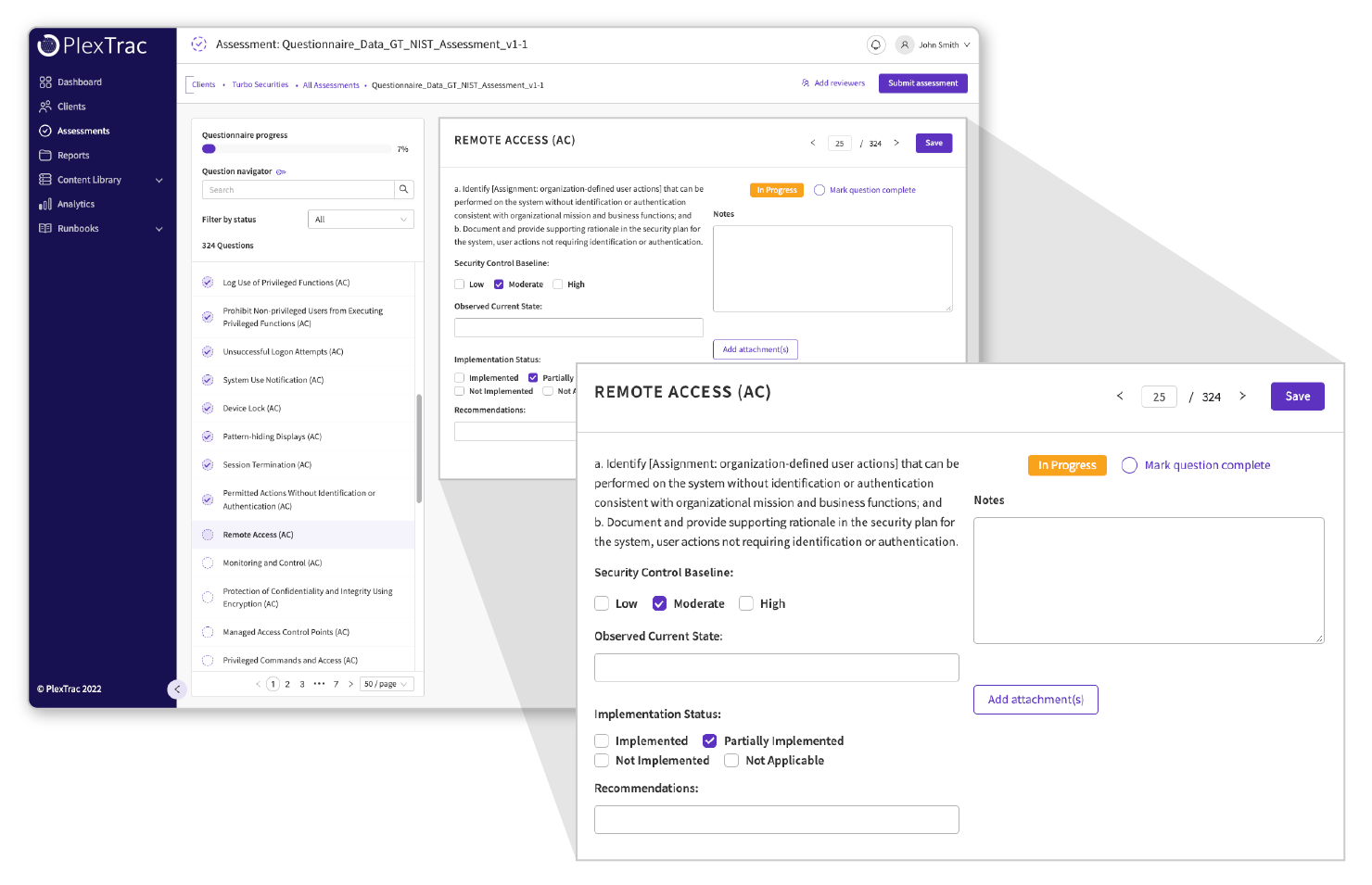
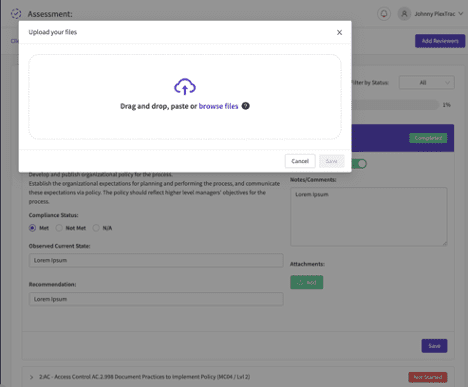
For each question in the assessment, you also have the ability to attach any relevant files to the specific question, including actual copies of written policy and screen shots of collected evidence. All of this information is passed on to the final report for further analysis, record keeping, and attestation.
Conquer Your Assessments with PlexTrac
Why not use one platform to support all the services your security consultancy offers? With modules designed to streamline data collection, writeups, reporting AND assessments, PlexTrac offers one solution for all the needs of security service providers.
The busiest time of the year can be so much better with the right partners … isn’t that what you tell your clients? Partner with PlexTrac for your security workflow management and conquer Q4 this year.
Schedule a demo today to see more!