

Prioritizing Risk & Remediation
Automatically prioritize remediation across your consolidated security data with configurable risk scoring equations that leverage business context – enabling you to cut through the noise and quickly identify your most impactful risks.
Automatically Prioritize Remediation by Business Risk
With an overwhelming volume of vulnerabilities across tools and functions, effective prioritization is necessary to identify and address your most critical issues in a timely manner. PlexTrac’s risk scoring engine allows you to build configurable scoring equations – factoring in the variables most important to your business, industry, and risk appetite – so you can automatically prioritize the highest risk items specific to your organization, assign, and track through to remediation.
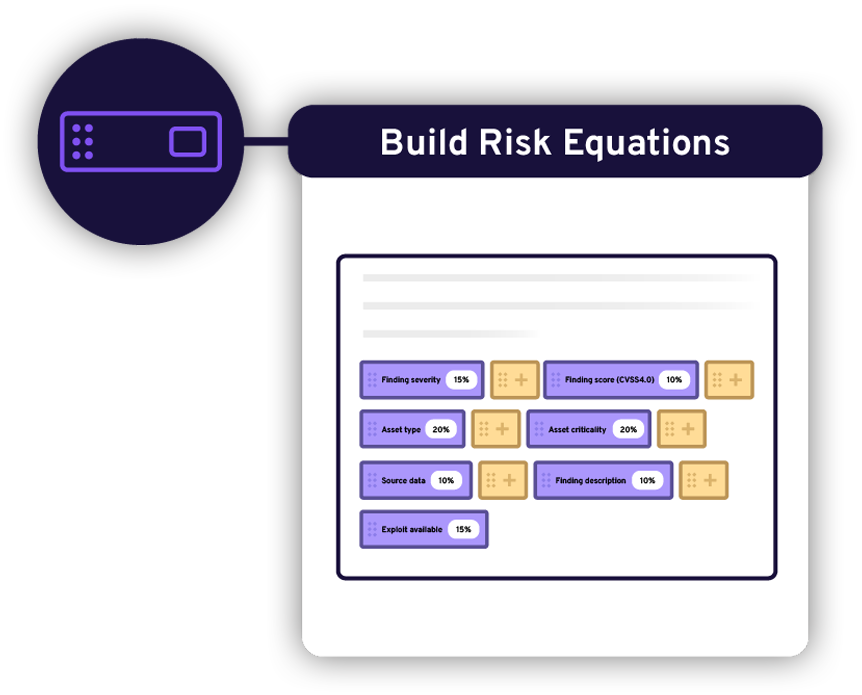
Build Risk Equations
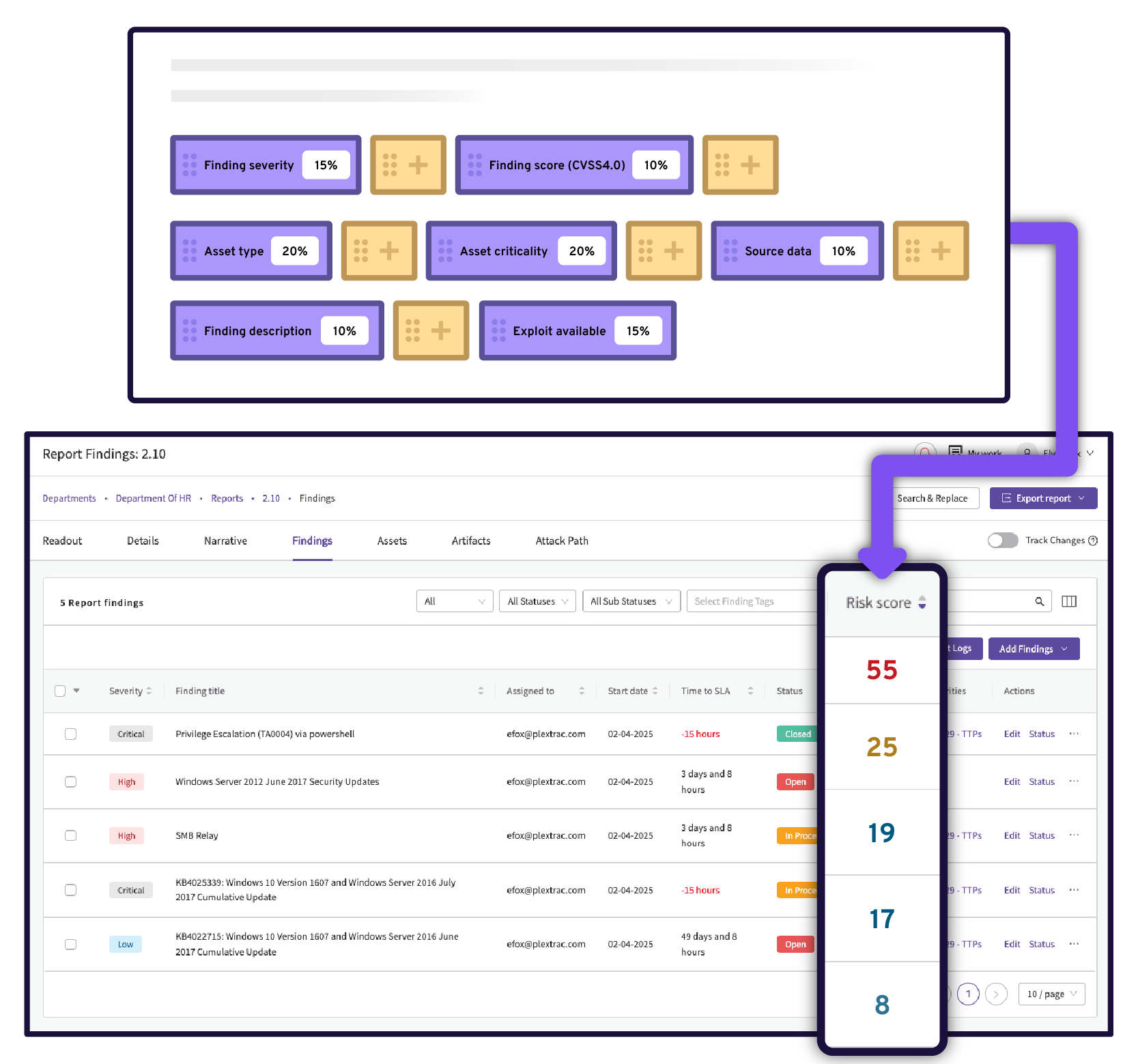
Build fully-configurable risk scoring equations that leverage business-context – such as asset criticality or physical location – to meet your organizational needs, industry requirements, or risk appetite when it comes to prioritizing issues for remediation.
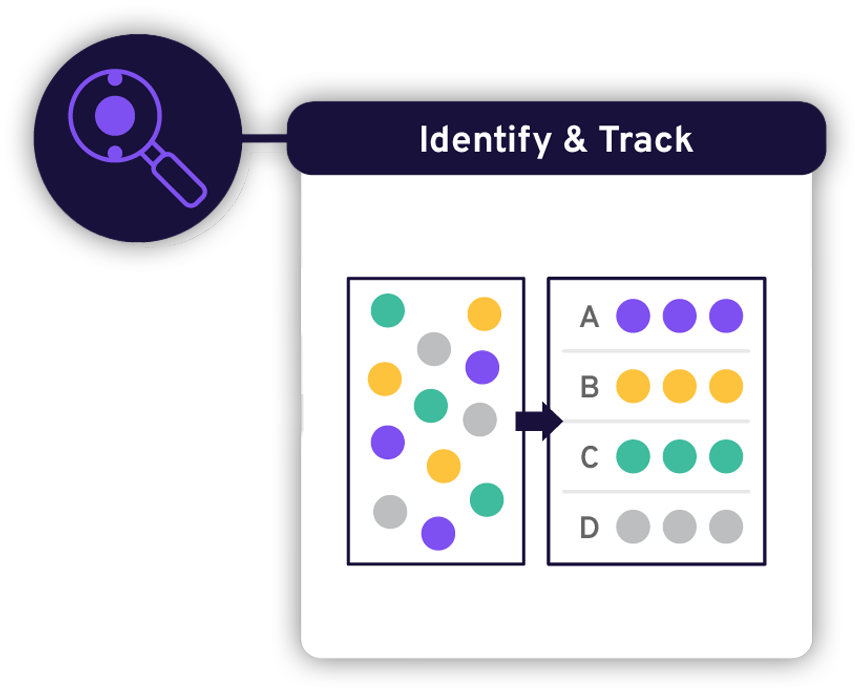
Identify & Track
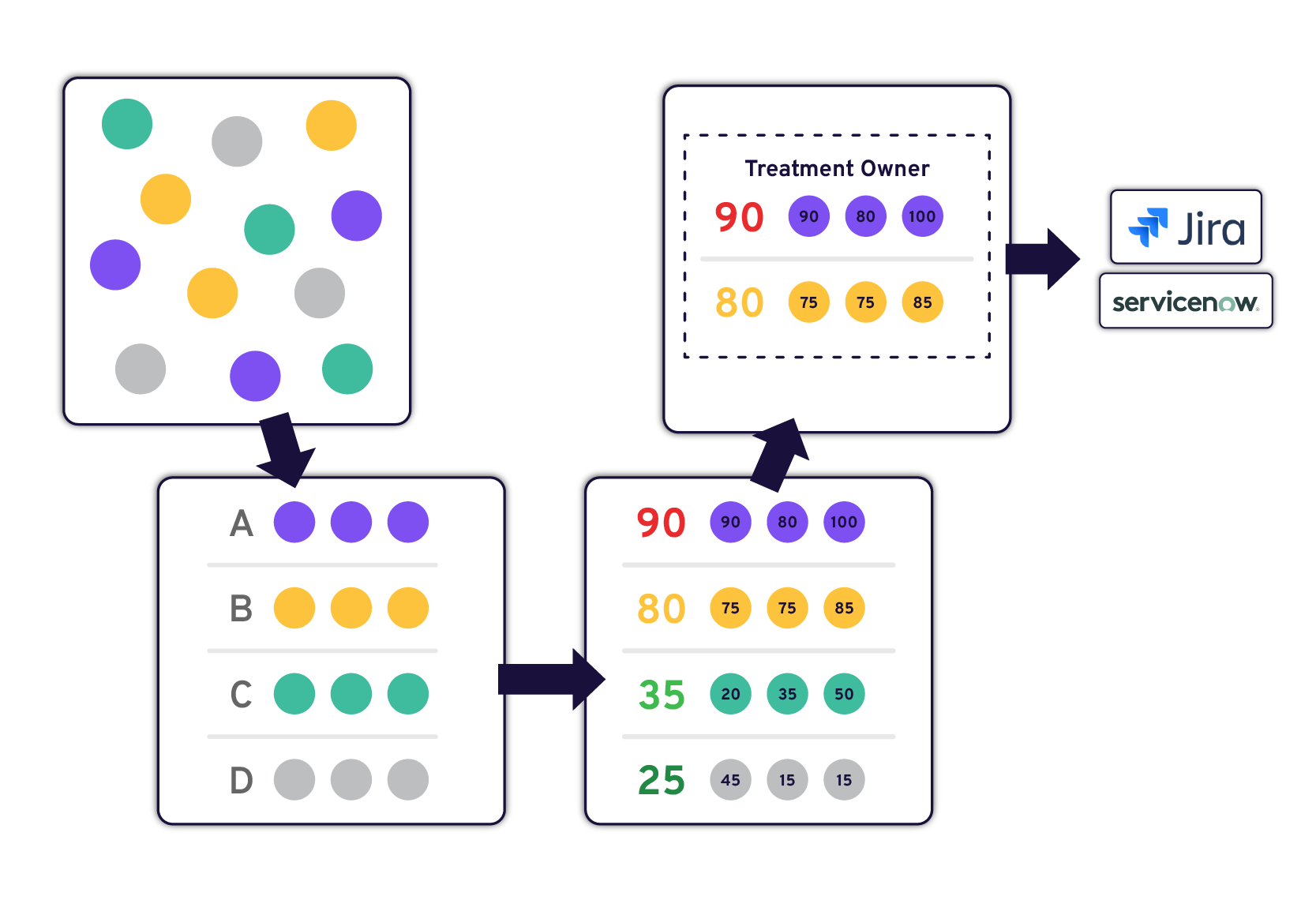
An ever-increasing attack surface results in an overwhelming number of findings needing to be scoped for issue identification. Identify the underlying issues within your offensive security data and build thematic groupings to track.
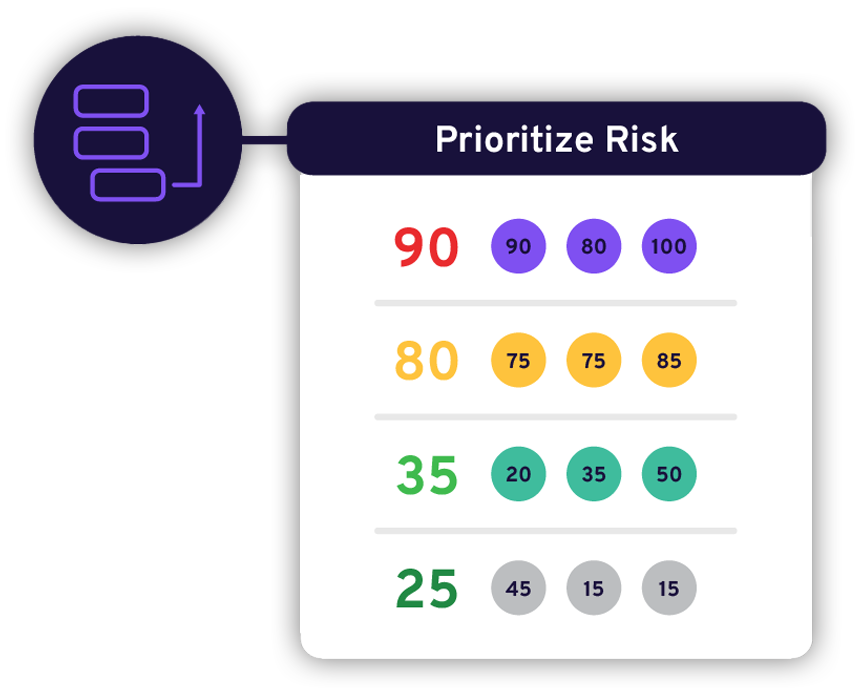
Prioritize Risk
Automatically calculate risk to streamline prioritization by applying your contextual risk scoring equations across all individual findings or groups of findings to auto-generate a cyber risk score based on potential business impact.
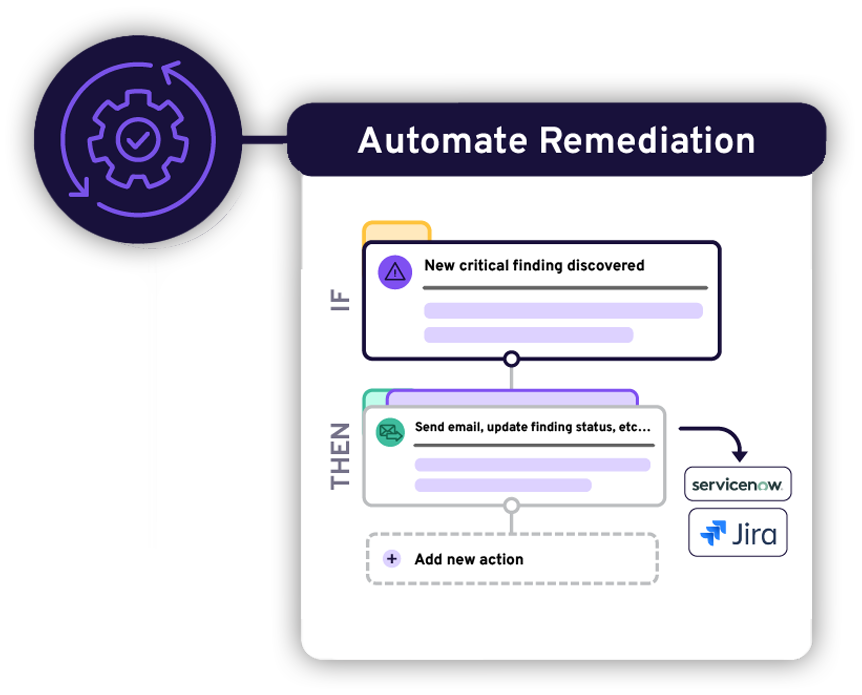
Automate Remediation
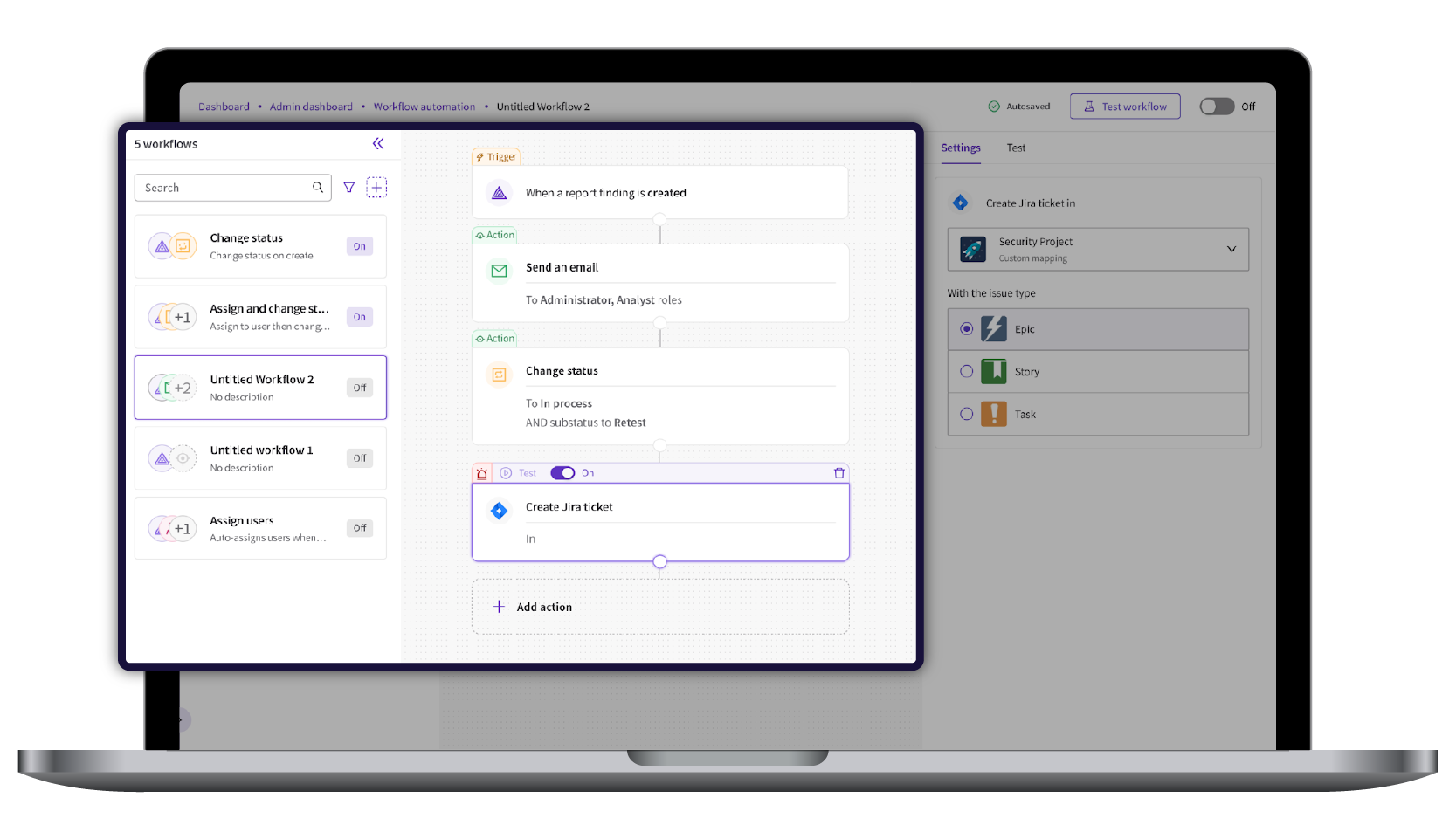
Speed mobilization and eliminate manual processes by building automated remediation workflows for trigger events – such as when a new critical finding is discovered – that may tie into existing ticketing solutions, such as Jira and ServiceNow
Automatically prioritize risk with business context
Build cyber risk scoring equations that leverage your specific business context to automatically prioritize remediation efforts based on true risk impact across your consolidated security data.
Automatic risk-based prioritization may be applied at both the individual finding level and across groups of thematic findings.
Speed mobilization with automated remediation workflows
Build automated remediation workflows based on trigger events – such as a newly discovered critical vulnerability – that may integrate with your security and collaboration tools (Jira, ServiceNow, Slack, etc.) to tie into existing workflows and eliminate repetitive manual efforts.
Uncover vulnerability root causes and manage remediation
Create thematic groupings of vulnerabilities and assets to track and identify the underlying issues introducing vulnerabilities into your environment. Automatically prioritize for remediation by applying contextual risk scoring at both the vulnerability and grouping level.
Real-time remediation efforts update prioritization
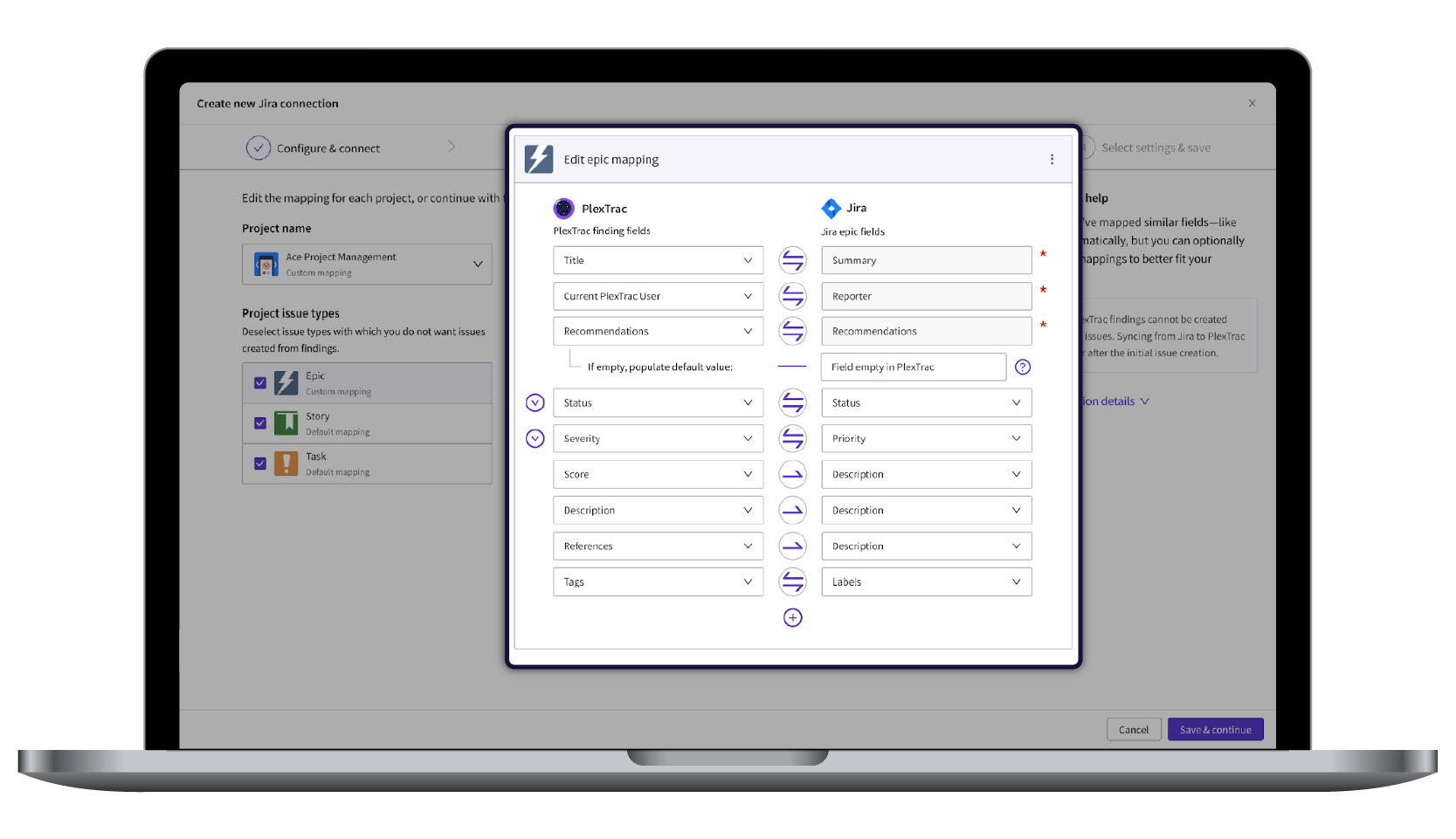
Bi-directional integrations with Jira and ServiceNow ensure your findings remain up to date in PlexTrac, automatically adjusting risk based on remediation activities.
Hear What Customers Are Saying About PlexTrac



Featured Resources
Frequently Asked Questions
With ever-growing attack surfaces and an impossibility of remediating all vulnerabilities, prioritizing remediation is necessary in order to optimize resource allocation by directing efforts where they will have the greatest impact on reducing security risks.
Traditional scoring systems like CVSS don’t account for the actual business impact, so a high CVSS score on a non-critical asset behind a firewall may pose less risk than a medium CVSS score on a business-critical asset. Leveraging business context helps prioritize risks based on their true impact to the organization and aligns security efforts with business priorities.
Asset criticality may be leveraged when configuring your cyber risk scoring equation to help determine the potential business impact of a vulnerability or group of vulnerabilities. Vulnerabilities affecting critical assets may be weighted accordingly to calculate a higher risk score, ensuring that remediation efforts focus on protecting the organization’s most valuable resources.
A cyber risk scoring equation typically includes variables such as finding severity, CVSS score, exploitability, asset type, asset criticality, and exposure. As you evolve your equations to factor in additional context, you may also choose to include custom fields, custom tags, CVE, CWE, asset count, asset physical location, asset ports, and more.
Start with PlexTrac’s out-of-the-box equations, or evolve your own equations over time to include additional variables as your prioritization processes continue to mature.
You may configure risk scoring equations at the individual business unit or client level. This allows you to apply multiple equations to accommodate unique risk appetites, business nuances or industry-specific needs.
Yes, risk scores will be immediately applied to new vulnerabilities ingested or manually created in PlexTrac. If you are using the Priorities module to score risk across a grouping of vulnerabilities, the risk score will adjust based on your remediation activities as vulnerabilities within the grouping are updated or closed.
Risk scoring equations automate prioritization workflows to quickly inform where to focus remediation efforts. Combine this with PlexTrac’s workflow automation capabilities and ticketing integrations to significantly reduce manual efforts, speed actioning, and automate remediation workflows.
Get Started With PlexTrac
Jump into a demo and see PlexTrac for Prioritizing Remediation in action.
