Cyber Security Risk Assessment
In our modern, always connected technological world data and information has never been more vulnerable to theft. This is why it is so crucial for your company to run a Cyber Security Risk Assessment. A Cyber Security Risk Assessment is a crucial aspect of any company’s risk management strategy, as almost every company nowadays relies on information technology as an integral part of business operations. Because of this there are always new risks companies must be aware of. This is where a Cyber Security Risk Assessment comes into play.
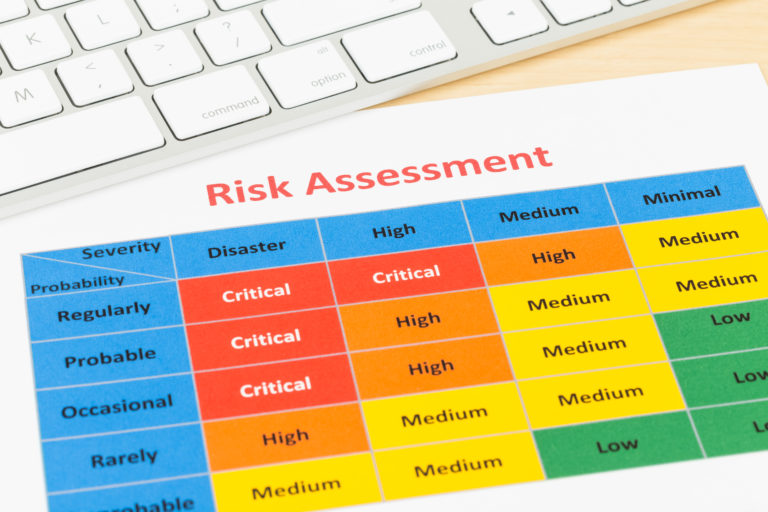
A Risk Assessment is defined as the process of identifying, analyzing, and evaluating risk in your company. This Risk Assessment makes sure that the controls your cyber security team puts into place align with the risks that your organization faces. If you don’t conduct a Risk Assessment your team will likely waste valuable time, resources, and effort on plugging holes that don’t need to be filled in your systems. A productive Risk Assessment will tell you where your most important and greatest risks are, and where your team should focus their patching efforts.
What Does a Cyber Security Risk Assessment Test For?
A Cyber Security Risk Assessment will identify various information assets that are vulnerable to a cyber-attack. This test is performed on your company hardware, systems, laptops, customer data, intellectual properties and more. Once the test is complete the Risk Assessment will identify the vectors in your security controls that could affect, damage, or compromise your assets. This is done by performing a risk evaluation and estimation, followed by a selection of security controls to treat the identified risks. It is crucial to consistently monitor your risk environment to detect any contextual changes in the organization, and to maintain an overview of the complete risk management process for future patch work.
Most Cyber Security Risk Assessments are performed based on the international ISO/IEC 27001 standard, which is a global information security standard. This provides specifications for best use ISMS -Information Security Management Systems. ISMS is a risk-based approach to corporate information security risk management that addresses the risk of all of the people, processes, and technology within your company. It is important that organizations “retain documented information about the information security risk assessment process” so they can demonstrate their compliance with these security standards. Overall, ISO/IEC 27001 and Risk Assessments overall perform tests on all parts of your company to make sure your risks are known, minimized, and acted upon.
Why Are Cyber Security Risk Assessments Important?
Cyber Security Risk Assessments are important for a host of reasons. First and most importantly, they keep your company safe and secure. Knowing the important security risks for your company is vital to the efficient work of your cyber security team. This will keep the focus of their efforts on the important identified attack vectors and away from unimportant holes in your defenses. A cyber security team that is focused and on target will be able to both maximize your defenses against attacks and maximize the safety of all individuals and information associated with your company.
Risk Assessments are nothing new. Long before the age of information technology and computers companies still had to protect themselves from outside threats and attacks. Cyber Security Risk Assessments are a natural evolution of the age-old practice of securing your company and its important assets. These online Risk Assessments are crucial because more risks than ever exist online. Hackers and other bad actors are constantly on the hunt for obtainable company data through information systems. This means that your company defenses will need to consistently be bolstered and improved. The best way for cyber security teams to do this is to perform Cyber Security Risk Assessments to identify the biggest risks your company has and minimize the chances of those risks being exploited.