Prevent Unauthorized Software from Contaminating Company Networks
End-users are one of the most common targets for the contamination of a Company network. These users can be easily manipulated if not well informed. Hackers use this to their advantage for personal gain of your information, or an overall sabotage of your company. This blog post clearly communicates the role of the user in preventing the introduction of unauthorized software. It also makes clear prohibitions against malicious “hacker-like” activities on Company networks for any purpose.
Users should adhere to the following directives in order to ensure a preventative strategy against malware and other unauthorized software:
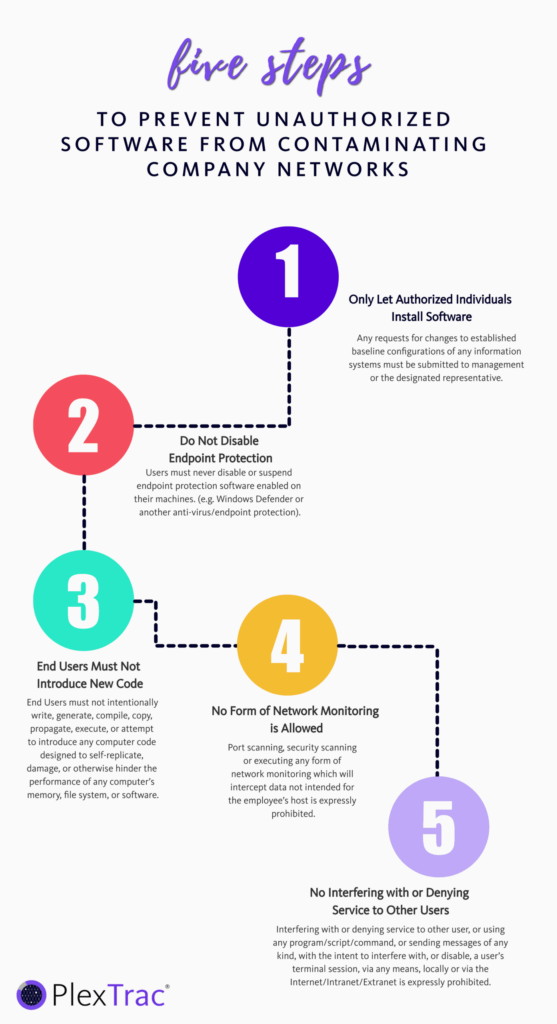
1. Only Let Authorized Individuals Install Software
Only authorized staff or contractors, with express approval, are authorized to install or download any software. Any requests for changes to established baseline configurations of any information systems must be submitted to management or the designated representative. Staff will research potential business, security and financial impacts of the requested changes and disseminate this research to members of the Change Control Board.
2. Do Not Disable Endpoint Protection
Users must never disable or suspend endpoint protection software enabled on their machines. (e.g. Windows Defender or another anti-virus/endpoint protection).
3. End Users Must Not Introduce New Code
End Users must not intentionally write, generate, compile, copy, propagate, execute, or attempt to introduce any computer code designed to self-replicate, damage, or otherwise hinder the performance of any computer’s memory, file system, or software.
4. No Form of Network Monitoring is Allowed
Port scanning, security scanning or executing any form of network monitoring which will intercept data not intended for the employee’s host is expressly prohibited.
5. No Interfering with or Denying Service to Other Users
Interfering with or denying service to other user, or using any program/script/command, or sending messages of any kind, with the intent to interfere with, or disable, a user’s terminal session, via any means, locally or via the Internet/Intranet/Extranet is expressly prohibited.